Crowded & Spaced Teeth Treatment
Most people think about straight, evenly spaced teeth as a cosmetic issue. They want a beautiful smile and consult an orthodontist to improve their smile. But straightening crowded or spaced teeth isn’t just about how you look. It’s also the basis for long-term oral health and systemic wellness. At the office of Matthew Molitor DDS, MS, we specialize in correcting complex alignment issues that require the accuracy and skill of a dedicated orthodontic specialist.
What Is Tooth Crowding?
Crowding occurs when there is not enough space in the jaw for teeth to fit. This lack of room causes teeth to twist, overlap, or become displaced. Crowding is often the result of a mismatch between tooth and jaw size or the improper eruption of permanent teeth.
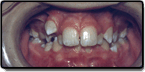
before
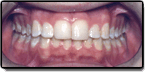
after
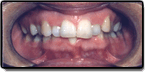
before
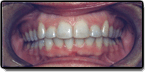
after
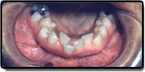
before
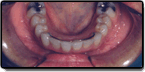
after
What Is Tooth Spacing?
Spacing is the opposite of crowding. It happens when excess space causes gaps between teeth. Many see spacing as only a cosmetic issue. However, it can result from missing teeth, impacted teeth, or abnormal tissue attachments that pull teeth out of alignment. Untreated gaps may leave gums vulnerable and interfere with proper bite function.
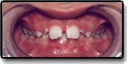
before
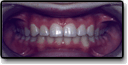
after
Why Treat Crowding or Spacing Problems?
Correcting these issues is an investment in your future health. Beyond improving appearance, orthodontic treatment helps prevent dental problems. Properly aligned teeth are easier to brush and floss, which reduces the risk of dental decay. Crowded or spaced teeth make cleaning difficult or leave gums exposed, contributing to periodontal disease.
Proper alignment and spacing of your teeth also help them function properly when you eat, chew, and speak. This prevents uneven tooth wear and jaw strain that can contribute to TMJ disorder and other painful conditions.
Orthodontic Treatment Options for Crowding & Spacing
As a specialist office, we offer several advanced solutions. These options are tailored to your anatomy and unique orthodontic needs:
- Traditional Braces: These metal and wire braces are highly effective for complex movements and structural corrections. Traditional braces are typically required for the most complex corrections.
- Invisalign®: Invisalign is a discreet, removable option for many mild to moderate alignment cases. The clear aligners must be properly designed and carefully monitored for the appropriate outcomes.
- Preventive Appliances: We use functional tools to guide jaw growth and tooth eruption in younger patients, avoiding the need for more extensive orthodontic correction when they are older.
The Specialist Advantage
Many general dentists provide orthodontic services after taking short courses. Dr. Molitor, a board-certified orthodontist, handles difficult cases. We regularly treat “rescue cases”—patients whose earlier treatments failed elsewhere. Choosing a specialist from the start means you will receive the right treatment from the start.
Do Crowded Teeth Always Require Tooth Extraction?
No. Extractions are sometimes needed in severe cases to make space. Modern orthodontics now focuses on expanding the dental arch when possible. This often creates enough room to align teeth without removals. Dr. Molitor considers each case to keep your natural teeth and get optimal results.
When Should Crowding or Spacing Be Evaluated?
The American Association of Orthodontists recommends an initial check by age 7. Early screening lets us find subtle jaw growth or tooth issues. For adults, it is never too late. If you notice shifting, cleaning problems, or dislike your smile, it’s time for a consult.
Crowding & Spacing FAQs
Are crowded teeth bad for your health?
Yes. Crowded teeth let plaque and bacteria accumulate in areas that you can’t clean. As a result, you face a much higher risk of gingivitis, bone loss, and tooth decay, all of which can affect your overall systemic health.
Can Invisalign® fix crowded teeth?
In many cases, yes. However, Invisalign is a tool, not a cure-all. Its success depends entirely on the doctor’s expertise. Dr. Molitor’s specialized training enables him to solve complex crowding that general providers may avoid.
What causes gaps between teeth?
Gaps between teeth often result from heredity. Different tooth and jaw sizes cause some gaps, while thumb or finger sucking creates others. Missing teeth or excessively thick gum tissue (frenum) between teeth also form gaps.
Is it too late to fix crowded teeth as an adult?
Never. Adult orthodontics is increasingly common. Though adult bones no longer grow, teeth can still be adjusted safely and effectively. Results benefit both health and appearance.
Will gaps in teeth come back after treatment?
Teeth tend to shift back to their original positions. Retainers are critical. We provide custom plans to keep your new smile for life.
A Note on the Value of Care
We understand that specialized orthodontic care is a significant financial commitment. While the upfront cost may be higher than mail-order or generalist options, the value lies in the permanence and precision of the result. Investing in an orthodontic specialist now prevents the physical pain and financial cost of correcting failed treatments later. Your smile is a lifelong asset; trust it to an expert.
If your teeth are crowded or too widely spaced and you would like to explore orthodontic solutions, call our office at Matthew Molitor DDS, MS Phone Number (530) 758-6420 to schedule a private consultation with Dr. Molitor. Take the first step toward a stronger, more confident smile today by scheduling your appointment with us.